Thursday, June 10, 2010

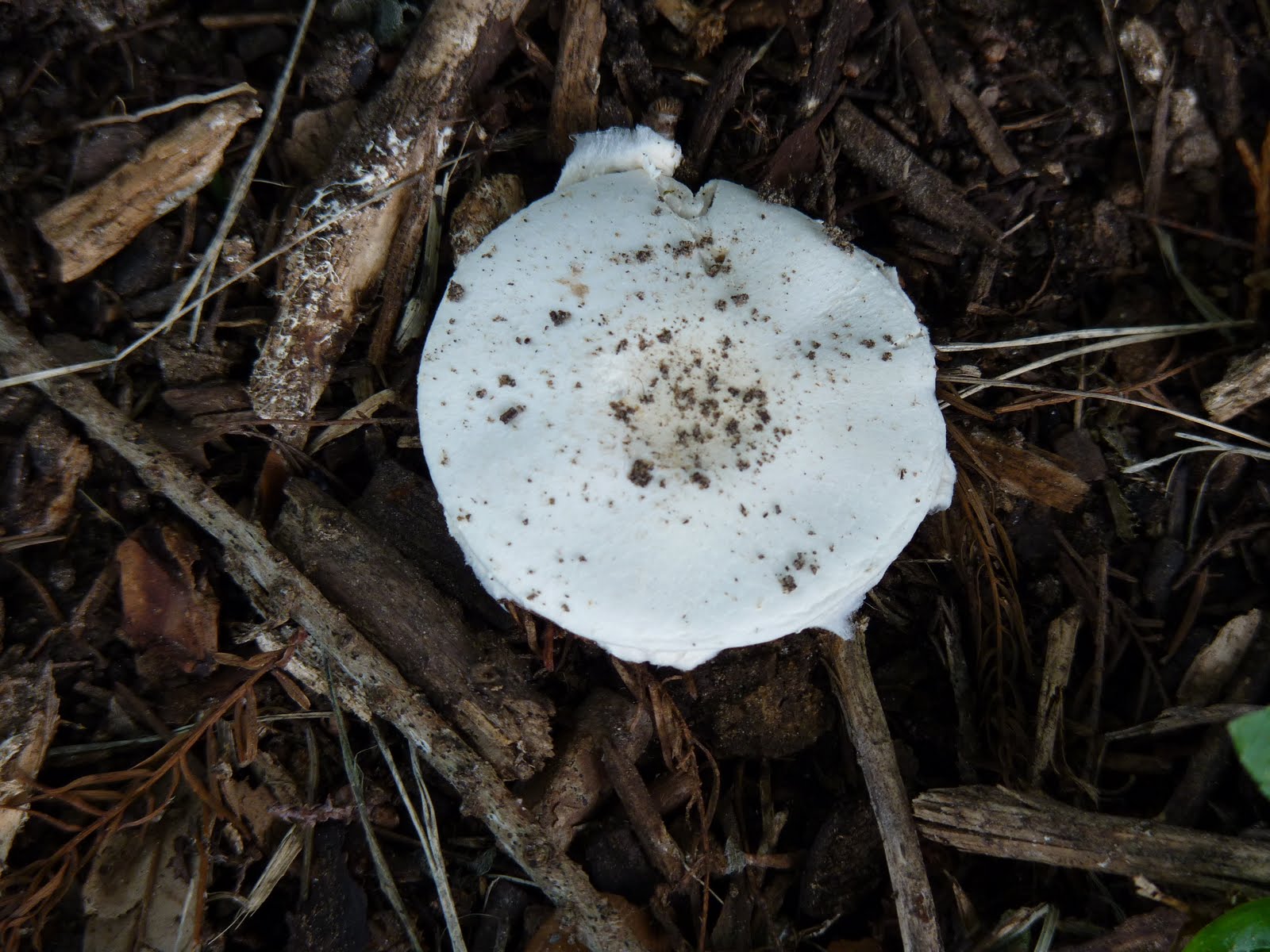
Wild Mushrooms

As gourmands ("foodies" to today's generation) know, mushrooms are a fungus/fungi. I try very hard to put that thought out of my mind when I am enjoying grilled mushrooms with a steak or some other dish. I found these wild mushrooms growing in my neighbor's yard, under a mostly dead bush, but with lots of shade and protection... which probably accounts for their vigorous growth. That, and the recent rains we have had. I am impressed with their petal-like shape, rendering them like a lovely white flower.


Wednesday, June 9, 2010

Gaillardia Grandiflora

What a fancy name for such an ordinary seeming flower that grows both as a cultivated plant and as a wildflower. These photos were taken of wildflowers in a field. The common name for this flower is "Arizona Sun" or "Blanket Flower." As you can see, there is some clover interspersed with the blanket flowers.


Tuesday, June 8, 2010

Lovely But Poisonous Oleander

Oleanders were always part of the gardens of my childhood. They make great hedges and many afternoons of my childhood were spent standing by my mother as she watered the oleander hedge. As part of my education, I was warned about the poisonous qualities of oleanders. I was even told not to stand under an oleander during a rain storm or allow it to drip on me.

The largest oleander I have ever seen was in my own backyard in Tucson, AZ. I would often cut it back but it would continue to grow, despite the arid conditions.


Oleanders come in several colors and there is even a dwarf variety. The small or dwarf oleanders remind me of my neighbors in Tucson, who had their backyard professionally landscaped. Dwarf oleanders were planted along one side of the house and in a few sporadic plantings. Their flowers were peachy-colored. Very pretty.


These oleanders are planted in a median in southwest Houston. They require little care and make the landscape quite graceful.


Monday, June 7, 2010

Golden Liriope

Lavender or purple is the usual color of Liriope but it occasionally presents itself in a golden or silver color, as above and below. Enjoy!


Sunday, June 6, 2010

Liriope

Liriope is a popular ground cover or an edging plant on the perimeter of flower beds. For most of the year, they are just a mounding, evergreen plant. But then the violet flowers come alive here in Houston in June, with just the right touch of rain and sun. Today it was raining and I took the opportunity to photograph some of the blooming liriope.
In recent years, a new variety has appeared with silver and golden flowers in place of the lavender color of multiple flowers on a small stalk. I have a few that are of the golden variety and will post those later.


Saturday, June 5, 2010

What Is It?

This will be impossible to guess... I'll explain it tomorrow...

AND THE ANSWER IS... I drink a kind of tea that comes in a cylindrical tin from The Republic of Tea, and the tea bags are shaped in a circle or round, packed 50 to a tin. On this day, the tin was empty, and I noticed some very fine tea remnants in the bottom of the tin; I tapped the edge of the tin against my sink. Because the the sink was wet, the fine grains of tea formed a sort of geological, interesting shape. I just had to take a photo of it. If you look very carefully at the bottom right hand corner, I think you will see the faint edge of the drain strainer basket.

Friday, June 4, 2010

Canna Lily

The canna lily is a beautiful, showy plant that produces spectacular blooms and large, broad leaves. This plant is indigenous to Central and South America and has now spread to many tropical and subtropical regions of the world. Cannas are one of the most popular plants in gardens throughout the world and professional growers who offer these plants for sale are easy to find.

This plant comes in a wide variety of colors and the leaves can be variegated as well. Many beautiful canna lilies are a product of hybridization. They require about 6-8 hours of sun for healthy growth and they do need to be protected from the cold in winter.

Canna leaves are in themselves quite beautiful and come in a wide variety of colors and shapes - curved, curly. In India, the leaves are processed to make paper. In other instances, the seeds are made into jewelry, or become part of a musical instrument or may be added to a gourd to make the rattling sound.

In Thailand, the Canna is given as a traditional gift on Father's Day. In South America, cannas were grown as a starchy food source derived from the rootsource, particularly in Ecuador and Peru. For information about how to grow canna lilies or to purchase a canna lily, go to www.easytogrowbulbs.com.